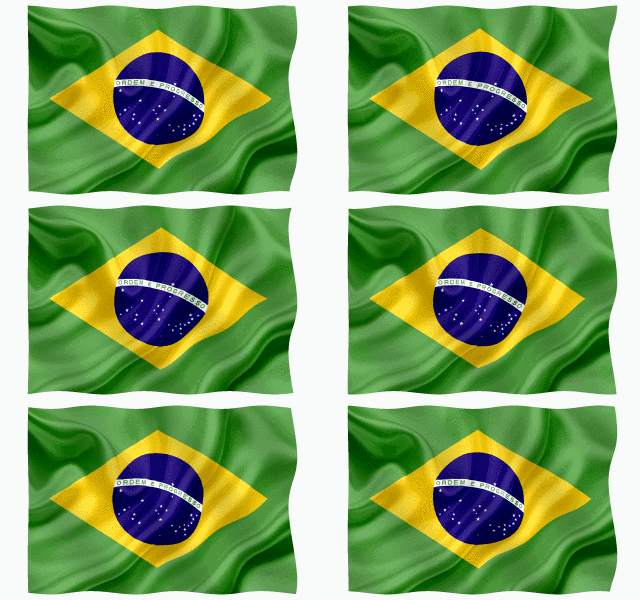
Hello everyone! Welcome back to my blog. Today we are going to look at music in South America, more specifically Brazil. Brazil is the largest country in South America and home of the Amazon rain forest. From Samba to soccer, Brazil is a culture rich country with a fascinating sense of music and rhythm. I hope you enjoy learning about Brazil as much as I did. With that said, vamos!
Samba dance
The mesmerizing samba dance is a dance that hails from Brazil during the time of the African slave trade. The slaves would hold on to their culture with fast paced music and dance despite the attempts from the Portuguese to stop them. Once slavery was abolished in Brazil in 1888, the newly freed slaves moved to the favelas. From there, they would practice their dances for the celebration of Carnival. At first, the dances were frowned upon by the upper crust. Eventually, the samba dance and music traveled through classes and boarders and is now considered one of the ballroom dances. There are many different types of Samba, such as solo and partnered. There is the traditional samba that you would see at Carnival and ballroom samba. Now that you know a bit of the history of Samba, what are the characteristics? Samba is a very fast paced drum beat and the dance consists of moving the hips and pelvis with the arms and torso following. Below I have a video of a dance group called SambAZ winning a competition for their routine.
Carnival
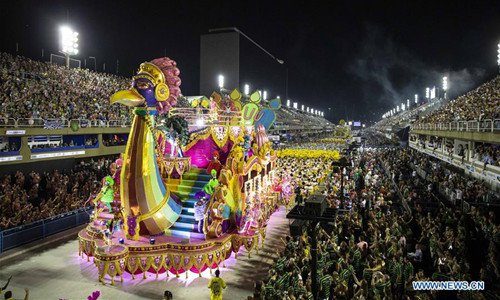
Before we dive deep into what Carnival, we have to look at the celebration of Lent. Lent is the 6-week time period between Ash Wednesday and Easter Sunday on the Christian calendar. Lent is a period of abstinence for many traditional or orthodox Christians. Some strictly give up meat, fish, eggs, and fats during this time, others might give up a luxury like watching tv or going to the gym. The abstinence from meat is actually where the word 'Carnival' or rather 'Carnevale' comes from! The first carnival happened in Italy in which they said 'Carne vale' or 'Goodbye to meat'. From Italy, it spread to Spain, France, Portugal. Then from there, it found it's way to Brazil. The first Brazilian Carnival took place in 1723. It starts on the Friday before Shrove Tuesday and ends on Ash Wednesday, so imagine an extravagant party for a whole week! Originally, Carnival was just a week of feasting before the 6-week long fast of meat. There might be some dressing up but it was more of a ballroom festival that took place in the homes of the very wealthy. That was up until there was African influences. While Brazil was being colonized, many colonizers brought slaves over to work on the sugarcane plantations. They brought along many practices such as parading around the village to ward off bad spirits. They also lead to the creation of the Samba dance and music as well as the costumes that you now see worn during the celebrations. Feathers are used to symbolize rebirth and the rising of the spirits. While most of the religious aspects have disappeared over the years, any people use the impressive floats and costumes as a way to bring up certain topics like Brazilian history, social and environmental issues like the amazon rainforest, and the struggle of the Afro-Brazilian population. Below, i have a video and a few pictures of the dancers and the floats from Carnival 2019. In this video, you can clearly hear the drums, the tambourines. You can also see the amazing floats and costumes.
For this last paragraph, I decided to do a section on one of my favorite singers, Anitta. I have no idea what she can't do. She is a Brazilian actress, singer, songwriter, tv host, business woman, and entrepreneur. She can speak and sing in 3 different languages (Brazilian-Portuguese, Spanish, and English). She does a lot of the stuff herself, like crunching her numbers and holds corporate gigs. She uses her platform to put Brazil on the map when it comes to the Latin inspired music. She feels that it's a country that easily gets overlooked when it comes to music. She even has her own little docuseries on Netflix called Vai Anitta that touches on her struggle with depression and her coming out as bisexual. I honestly relate with that so much that it gives a more humble aspect to her which I adore. Below is one of my favorite songs by her called Medicina. It is a bop and I could listen to it on repeat.
Well, that's all folks! I hope you enjoyed learning about the music culture of Brazil!
I really liked your last video. It included a lot of diversity. I found it really cool how Anitta does a lot of her stuff on her own and how she is a very successful and outgoing individual. Most celebrities today are nothing like that.
I actually did my blog on Carnival too! It's so interesting and I'd seriously love to attend it one day! All the colors, dancing, and music is amazing! I liked learning about the samba, the tango had a very similar story, especially about it originating from the slaves!
Your blog really interested me. I loved the Samba dance. The music really brought me in.I wish I could dance like that. It really reminds me of the Hawaiian dancers. Their costumes are so beautiful and different. They just complete it all.
I loved your inclusion of Carnival, it's honestly my favorite part of the year and I was heartbroken when I couldn't participate earlier this year. The energy and background behind it are amazing but not many people ever look for that part.
Hello everyone! Fall is finally upon us. The leaves are changing colors, the air is getting crisp and chilled. Out of curiosity, does anyone else have their taste in music change along with the season? I feel like mine does. You know what else changes? Gender roles! Gender roles in music has definitely changed over the years from jobs to clothing choices to music. Since this is for a music class, we are going to talk about how gender has changed in music and how being a biological female has affected me when it comes to music. I have never been into playing an instrument. It has never been my forte if I am being honest, but I used to be in marching band as a color guard member and one thing I remember so vividly was one of my friends was the only girl on the drumline. People always joked that she was the little sister of the group or she was just one of the guys, but she is an amazing drummer! She really enjoyed it and it made her unique. My last year of marching band, I overhear...
Hello everyone and Happy Halloween! I was really excited to do this blog and interview my dad because he has influenced my music taste a lot. We love rocking out in the car to hair metal and he tries to test my memory by asking me who sings the song on the radio. Without further adieu, my dad! I did cut some of it out because the original conversation was 20 minutes long! Me: So.....Uh, what is your favorite type of music now ? Dad: Now? Me: Yeah. Dad: Huh, Probably the hair bands still. Me: You still like the hair bands? Dad: Yeah Me: Um, Is that the same kind of music you grew up listening to? Dad: As far as what age? Me: Uhh? It depends on when you get really into music. Dad: I've always been into music. Dad: You know, growing up we didn't really have a lot of TV channels. Me: Fair enough.....um, let's see.... Me: Uh, I already know you've seen concerts and seen, like, bands live. How many do you think you've been to? Dad: you mean concerts? Me: Yeah. Dad: G...
Welcome back everyone! I hope all of you are enjoying the cooler weather and watching the leaves change colors. Today we are going to be talking about sub-Saharan Music and Culture. Despite what we see on the news, Africa is a place of color, music, dancing, singing. From mbiras to African Dance, come with me to explore the world of music below the Sahara. Mbira I really wanted to do a section on mbiras (or kalimbas if that is what you call them) because I love listening to sound of them. In the Google Doodle video, the sound is described as somewhere between water and air. I describe it as the twinkling of the stars. A mbira is an instrument with 22-28 metal keys on a soundboard called a gwavira. While playing the mbira, you will here a metalic buzz. This buzz adds depth to the sound and is also said to clear the mind of thoughts and worries so that the music can fill your soul. In Zimbabwe, the mbira is said to have healing properties and the Shona people say that i...


I really liked your last video. It included a lot of diversity. I found it really cool how Anitta does a lot of her stuff on her own and how she is a very successful and outgoing individual. Most celebrities today are nothing like that.
ReplyDeleteI actually did my blog on Carnival too! It's so interesting and I'd seriously love to attend it one day! All the colors, dancing, and music is amazing! I liked learning about the samba, the tango had a very similar story, especially about it originating from the slaves!
ReplyDeleteYour blog really interested me. I loved the Samba dance. The music really brought me in.I wish I could dance like that. It really reminds me of the Hawaiian dancers. Their costumes are so beautiful and different. They just complete it all.
ReplyDeleteI loved your inclusion of Carnival, it's honestly my favorite part of the year and I was heartbroken when I couldn't participate earlier this year. The energy and background behind it are amazing but not many people ever look for that part.
ReplyDelete