Cool Stuff No.1: Native American Music and Culture
Get link
Facebook
X
Pinterest
Email
Other Apps
Hello everyone! Thank you for checking out my blog and I hope you enjoy learning more about the Native American culture as much as I have.
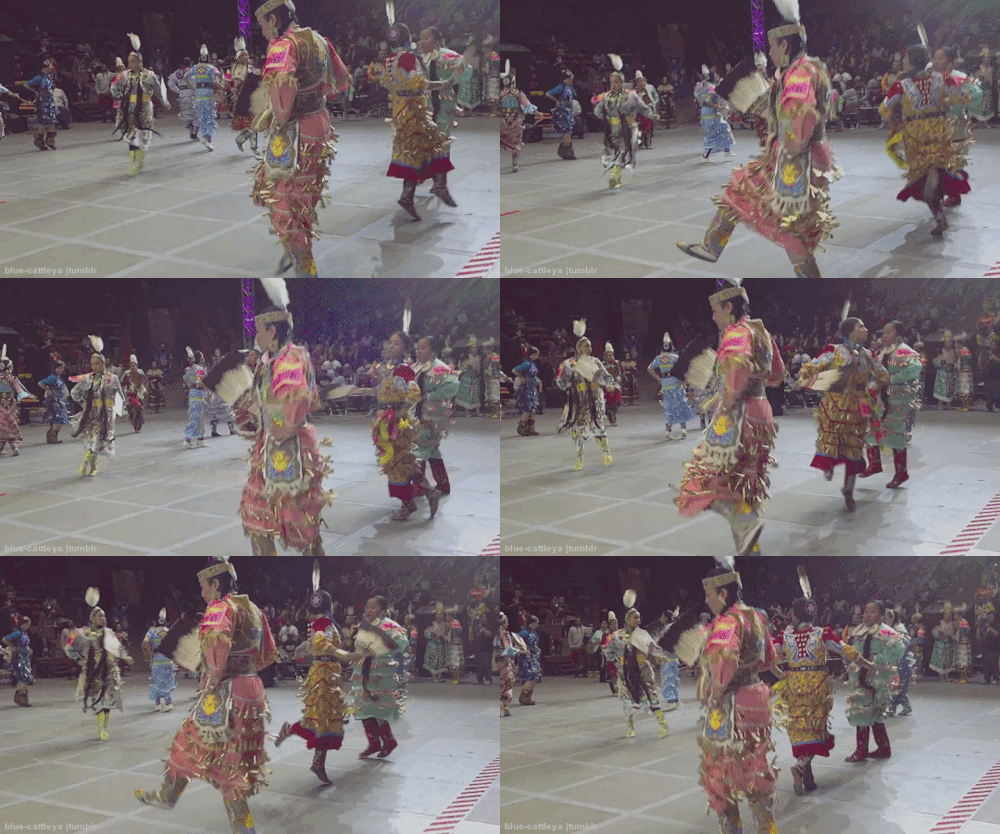
As I’ve been learning Native American culture and music, I instantly became fascinated with the jingle dress. I thought they were beautiful and the dancing looked so fun. The story of the jingle dress varies from tribe to tribe but the story always includes a man having a dream of four women adorned in green, blue, red, and yellow dresses with metal pieces. They dance forward, they do not dance backwards or spin around and the metal on the dress would make sound. During a powwow, a very young sick girl listened to the jingle dresses and began getting stronger.Native Americans believe that the sound made from the jingle dress asks the spirits for healing. That is why the dress is considered a healing dress. Originally, the metal pieces are made by tobacco lids curled into a cone shape. Now, you can have jingle dresses that are multiple colors, dancers can dance backwards and spin around. Cones can be bought pre-made or they can be handmade. The sound produced by the dresses are different depending on the materials used, the spacing between the cons, the amount of cones used. No two jingle dresses should sound the same. I think what is fascinating is how the dresses make the dancers instruments. The sound has been compared to the sound of rain which is beautiful. I like the video I found because it shows modern jingle dresses. You can hear the sounds of the jingle dresses, the singing, the drums, even the sounds of the people talking since it is not a professional video. In my opinion, it provides the perfect Powwow ambiance.
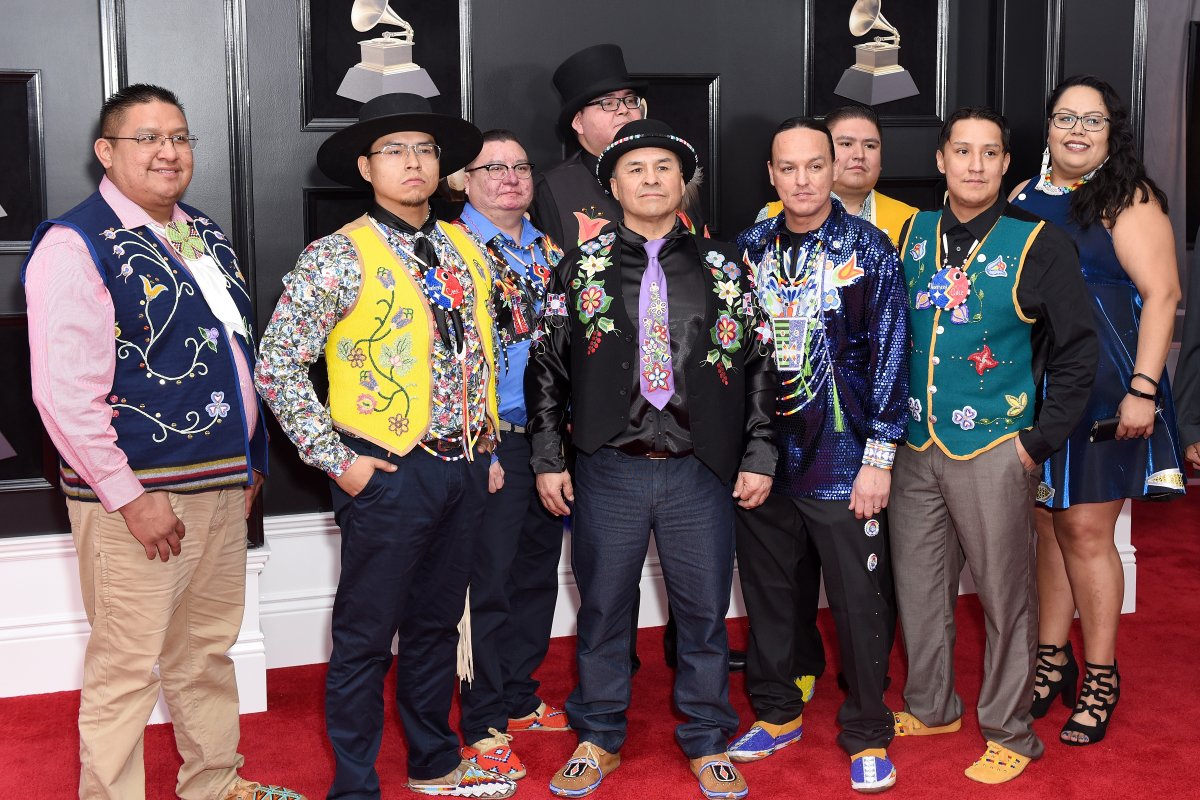
The Northern Cree Singers is a group created in the 1980’s and is composed of about 8 - 12 people. They are a drum and vocal group that was based in Alberta Canada. Their performances have won numerous awards and are fairly popular in the Native community. One song in particular that I found very interesting was one of their newer songs. I can’t find the exact release date but the song ‘You driving me crazy’ was released somewhere between 2009 and 2012. Yes, it includes the vocables, the drums, the natural timbre. It has the disjunctive melody that we have talked about in class, but one thing I noticed is that instead of being composed of just vocables or parts of native languages is that it included English. I knew the title was ‘You driving me crazy’ but I didn’t expect to hear it in the song. I think it is a fun song. I have it down below in case anyone else wanted to listen to it.
In my research, I was really curious about Native American Deities. I think the stories are so enchanting to listen to and give you more appreciation for nature. Since this is for a music class, I figured ‘Why not look up the Native American God of Music?’. This is what I have found. Kokopelli is known as a fertility god, a prankster, a storyteller and is called the wandering flute player. His story comes from the Hopi tribe which is located in the four corners area of the United States. Not much is known about his origin story but they say that he brings the transition from winter to spring. You can hear his flute playing in the spring breeze. The hunch in his back was from the sack of seeds and songs he carried with him as he played. His music would bring dance and joy to whoever heard it. I found a song dedicated to Kokopelli, the flute playing traveler, and it sounds so beautiful, but it brings such a new element to the culture. Before I found this, all of the songs primarily consisted of vocals, drums, maybe a shaker, but never a flute. Either way, the song is simply amazing.
I really enjoyed reading your blog. I, as well was very interested in the jingle dress. I thought they they were very unique and that they were beautiful as well. What I was very interested in about your blog was that you were fascinated by the Native American deities. I never even thought about that, so. I am glad that I got to read about it, and what you found. I also enjoyed the song, "You driving me crazy," i thought the harmonizing of the different voices were beautiful.
You really excite me with your blogs. I love the jiggle dance. I just love the way they dance and the cause for the dance. It makes me happy. I really enjoy listening to the singing .
It is interesting that the band the northern cree singers use their native language and English in their songs as well as using the vocables. I loved that you had the idea to look up the god of music for this culture, it is so interesting that they say he helps with the change from winter to spring and that you can hear him sitting with a hunch back playing in the spring breeze.
I really enjoyed all of the information you included about the jingle dresses. I would've never considered the spacing between the bells being an important factor to making each dress unique and sound different from one another. The song dedicated to Kokopelli was very mesmerizing and beautiful to listen to.
I enjoyed reading your blog! Especially the information about the drummers. I think it is fascinating how the Natives have gone through so much, and the country that they currently reside in tried to completely destroy their culture yet they still to this day practice important aspects of it. Native American tribes are very resilient and one of a kind. What I really love though, is how they've modernized particular aspects of their culture, such as the drum competitions.
Hello everyone! Fall is finally upon us. The leaves are changing colors, the air is getting crisp and chilled. Out of curiosity, does anyone else have their taste in music change along with the season? I feel like mine does. You know what else changes? Gender roles! Gender roles in music has definitely changed over the years from jobs to clothing choices to music. Since this is for a music class, we are going to talk about how gender has changed in music and how being a biological female has affected me when it comes to music. I have never been into playing an instrument. It has never been my forte if I am being honest, but I used to be in marching band as a color guard member and one thing I remember so vividly was one of my friends was the only girl on the drumline. People always joked that she was the little sister of the group or she was just one of the guys, but she is an amazing drummer! She really enjoyed it and it made her unique. My last year of marching band, I overhear...
Hello everyone and Happy Halloween! I was really excited to do this blog and interview my dad because he has influenced my music taste a lot. We love rocking out in the car to hair metal and he tries to test my memory by asking me who sings the song on the radio. Without further adieu, my dad! I did cut some of it out because the original conversation was 20 minutes long! Me: So.....Uh, what is your favorite type of music now ? Dad: Now? Me: Yeah. Dad: Huh, Probably the hair bands still. Me: You still like the hair bands? Dad: Yeah Me: Um, Is that the same kind of music you grew up listening to? Dad: As far as what age? Me: Uhh? It depends on when you get really into music. Dad: I've always been into music. Dad: You know, growing up we didn't really have a lot of TV channels. Me: Fair enough.....um, let's see.... Me: Uh, I already know you've seen concerts and seen, like, bands live. How many do you think you've been to? Dad: you mean concerts? Me: Yeah. Dad: G...
Welcome back everyone! I hope all of you are enjoying the cooler weather and watching the leaves change colors. Today we are going to be talking about sub-Saharan Music and Culture. Despite what we see on the news, Africa is a place of color, music, dancing, singing. From mbiras to African Dance, come with me to explore the world of music below the Sahara. Mbira I really wanted to do a section on mbiras (or kalimbas if that is what you call them) because I love listening to sound of them. In the Google Doodle video, the sound is described as somewhere between water and air. I describe it as the twinkling of the stars. A mbira is an instrument with 22-28 metal keys on a soundboard called a gwavira. While playing the mbira, you will here a metalic buzz. This buzz adds depth to the sound and is also said to clear the mind of thoughts and worries so that the music can fill your soul. In Zimbabwe, the mbira is said to have healing properties and the Shona people say that i...



I really enjoyed reading your blog. I, as well was very interested in the jingle dress. I thought they they were very unique and that they were beautiful as well. What I was very interested in about your blog was that you were fascinated by the Native American deities. I never even thought about that, so. I am glad that I got to read about it, and what you found. I also enjoyed the song, "You driving me crazy," i thought the harmonizing of the different voices were beautiful.
ReplyDeleteYou really excite me with your blogs. I love the jiggle dance. I just love the way they dance and the cause for the dance. It makes me happy. I really enjoy listening to the singing .
ReplyDeleteIt is interesting that the band the northern cree singers use their native language and English in their songs as well as using the vocables. I loved that you had the idea to look up the god of music for this culture, it is so interesting that they say he helps with the change from winter to spring and that you can hear him sitting with a hunch back playing in the spring breeze.
ReplyDeleteI really enjoyed all of the information you included about the jingle dresses. I would've never considered the spacing between the bells being an important factor to making each dress unique and sound different from one another. The song dedicated to Kokopelli was very mesmerizing and beautiful to listen to.
ReplyDeleteI enjoyed reading your blog! Especially the information about the drummers. I think it is fascinating how the Natives have gone through so much, and the country that they currently reside in tried to completely destroy their culture yet they still to this day practice important aspects of it. Native American tribes are very resilient and one of a kind. What I really love though, is how they've modernized particular aspects of their culture, such as the drum competitions.
ReplyDelete